Working in Ghana

For transparency, AI has been used during the generation of this content, with every care taken to verify its accuracy. Last updated October 2026.
Average Salary
Monthly salaries for expats working in specialist sectors such as oil and gas, engineering, finance, and international development are typically significantly higher than local salary levels. International assignments commonly offer between 48,000 – 144,000 GHS per month ($4,000 - $12,000) depending on seniority and employer. Expat positions commonly include benefits such as housing allowances, schooling for dependents, transport, and private healthcare.
Highly specialised or senior management roles – particularly in the oil, gas, and mining industries – can reach over 200,000 GHS per month ($16,000+) when allowances and bonuses are included.
General information
Currency
Ghanaian Cedi (GHS)
Official language
English
Conversational languages
Akan Ga Ewe Hausa
Time zone
Greenwich Mean Time (UTC+00:00)
Common types of Employment or Contracting
Ghana’s labour market includes a mix of formal employment arrangements and independent contracting opportunities.
Contractors should ensure that their arrangements reflect genuine independent business activity and comply with applicable tax, immigration and business-registration requirements.
Common types of employment
Common types of contracting
Already secured a job overseas?
If you have secured an assignment but are unsure of where to start with setting up as a Freelancer or B2B contractor, please feel free to reach out to our International team for assistance.



Living in Ghana
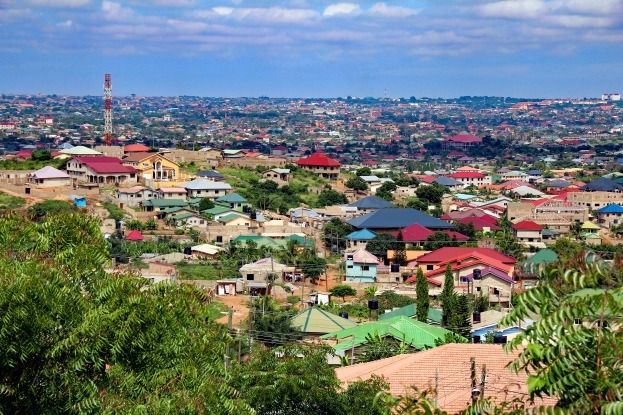
Ghana is widely regarded as one of West Africa’s most welcoming and politically stable countries. The lifestyle is centred around strong community ties, vibrant markets, music, and cuisine. The country is culturally diverse and English is widely used in business and government, making integration easier for many expats.
The cost of living in Ghana varies depending on lifestyle and location. Accra, the capital, is generally the most expensive city, particularly in neighbourhoods popular with expats such as Airport Residential Area, Cantonments, and East Legon. Other cities such as Kumasi, Takoradi, and Tamale are typically more affordable.
- The average cost of a weekly grocery shop for a small family is 700 – 1,100 GHS ($47 - $73)
- Monthly rent for a 2 – 3-bedroom property costs roughly 6,000 – 18,000 GHS ($400 - $1,200), depending on location and property standard
- Monthly childcare costs roughly 1,800 – 3,800 GHS ($120 - $250) for private daycare or nursery
- Fuel costs fluctuate regularly depending on regional and global oil markets
Vehicles in Ghana drive on the right-hand side of the road. Expats can usually use their existing driving licence for a limited period after arrival, but long-term residents are typically required to obtain a Ghanaian driving licence through the Driver and Vehicle Licensing Authority (DVLA). This may involve submitting identification documents, completing a vision test, and passing a driving theory and practical test depending on the licence’s country of origin.
Weather in Ghana
Ghana has a tropical climate, characterised by warm temperatures throughout the year and distinct wet and dry seasons. Coastal and southern regions generally experience two rainy seasons (April – June and September - November), while northern areas tend to have one longer rainy season followed by a dry period.
Temperatures remain consistently warm year-round. Average daytime temperatures typically range between 26°C and 32°C, though it can feel hotter due to humidity in coastal regions such as Accra and Takoradi. During the hottest months, temperatures may reach 34°C or higher, particularly in northern areas. Even during cooler months, nighttime temperatures rarely fall below 22°C, making Ghana a warm destination year-round.

Language and integration support
Although English is the official language of Ghana, many local languages such as Twi, Ga and Ewe are widely spoken in daily life. Expats who wish to integrate more often choose to learn basic conversational phrases in one of these languages. Language schools, universities, and cultural organisations in major cities frequently offer courses designed specifically for expats.
Government institutions and community organisations also provide support services for expats, including cultural orientation programmes and business networking groups. International communities in Accra and other major cities host regular events that help newcomers build connections and adapt to life in Ghana.
For any translation needs - especially those required for work permit or visa applications - our dedicated Languages team is ready to support you. They provide accurate, timely translations and can guide you through the process to ensure all necessary documents meet the required standards.
Our services in Ghana
Across the globe, we support energy and engineering companies with the international recruitment and global mobilisation solutions they need to extend their capability and grow their businesses.
Find out about our international services

Global mobility
NRL Recruitment simplifies international employee relocation with seamless global mobility services. From visa assistance to cultural onboarding, we ensure your staff transitions smoothly across borders, minimising disruption and maximising productivity.
Payroll solutions
Managing payroll across multiple countries can be complex, but our payroll solutions make it simple. We handle accurate, compliant compensation for your global workforce, ensuring employees are paid correctly and on time, every time.
Global employer of record
With our global employer of record services, you can legally employ staff overseas without establishing local entities. We manage compliance, contracts, and HR administration, giving you the freedom to expand globally with confidence and ease.
International recruitment
Finding the right talent worldwide is effortless with our international recruitment solutions. We connect your business with top-tier professionals, managing the end-to-end hiring process so you can focus on growth and strategic priorities.